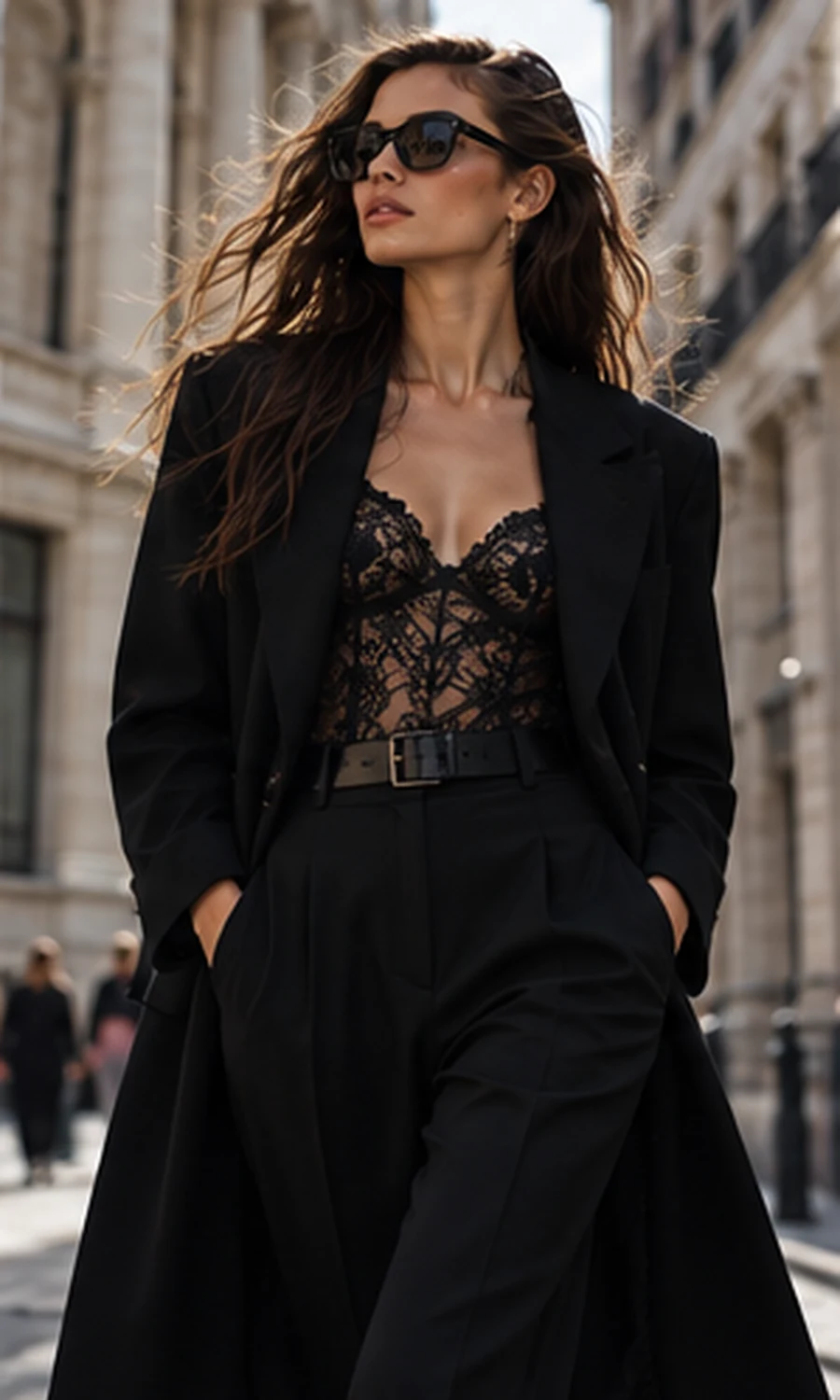
Start with the story
Editorial styling is not simply choosing fashionable garments. Ask what the photographs should communicate and who the imagined character might be. Translate the answer into a concise styling direction that the full team can understand.
Work with silhouette
Consider how shape reads from a distance: oversized tailoring, fitted layers, long lines or sculptural volume. A strong silhouette often remains recognisable even when the image is reduced to a thumbnail.
Limit the colour vocabulary
A restrained palette can unify photographs made in different locations or lighting conditions. Neutral tones allow texture and form to lead; deliberate colour accents can create focal points. Test garments together before shoot day to identify clashes.
Use texture thoughtfully
Leather, silk, denim, knitwear and technical fabrics react differently to light and movement. Combining textures adds depth, but too many competing surfaces can distract from the model and the central idea.
Edit accessories
Jewellery, eyewear, belts and footwear can define an editorial character. Choose accessories for a reason and remove pieces that do not support the concept. Ensure key product details remain visible when the assignment is for a specific brand.
Prepare practical backups
Check fit, closures and garment condition. Pack clips, fashion tape, lint rollers and spare options where appropriate. Keep accurate loan records and arrange returns. Good styling is both creative and organised.
Make a wardrobe continuity sheet
Photograph each approved outfit on a hanger or mannequin, and record the accessories, shoes and intended shot. Note the designer or lender and any handling instructions. A continuity sheet helps the team reproduce a look after lighting changes or location moves, and reduces the risk of missing credits.
Styling for the final crop
Consider how the garment reads in a close portrait, a vertical magazine crop and a wider landscape image. Small accessories can disappear in full-length photographs; oversized details can overwhelm a beauty close-up. Test the intended framing before finalising a look, especially when the publication needs multiple aspect ratios.
Further reading from La Modelle
Editorial note: This guide provides general information. Requirements and working practices vary by location, agency and assignment.