Fashion Industry | Milan Fashion Week | 10 October 2026
At Milan Fashion Week, Demna presented a vision of Gucci built around recognisable luxury, distinctive characters and the enduring appeal of Italian glamour. But can a compelling creative identity translate into a lasting commercial revival?
A fashion show designed like a store
For Gucci’s Spring/Summer 2027 collection, Demna transformed a Milan convention centre into an elaborate boutique-inspired setting. The decision placed the relationship between runway creativity and the retail experience at the centre of the presentation.
The venue offered more than a decorative backdrop. It suggested that the designer is thinking about Gucci not simply as a seasonal collection, but as a complete world: one that customers can recognise, enter and ultimately shop.
That distinction matters for a luxury house attempting to reconnect its fashion identity with consumer desire.
A successful runway presentation can generate headlines and social attention. A successful luxury brand must also create products that customers want to own, while maintaining the sense of exclusivity that supports its reputation.
Aristocrats, outsiders and a new Gucci wardrobe
Demna’s collection explored several versions of luxury dressing rather than insisting on one narrowly defined silhouette.
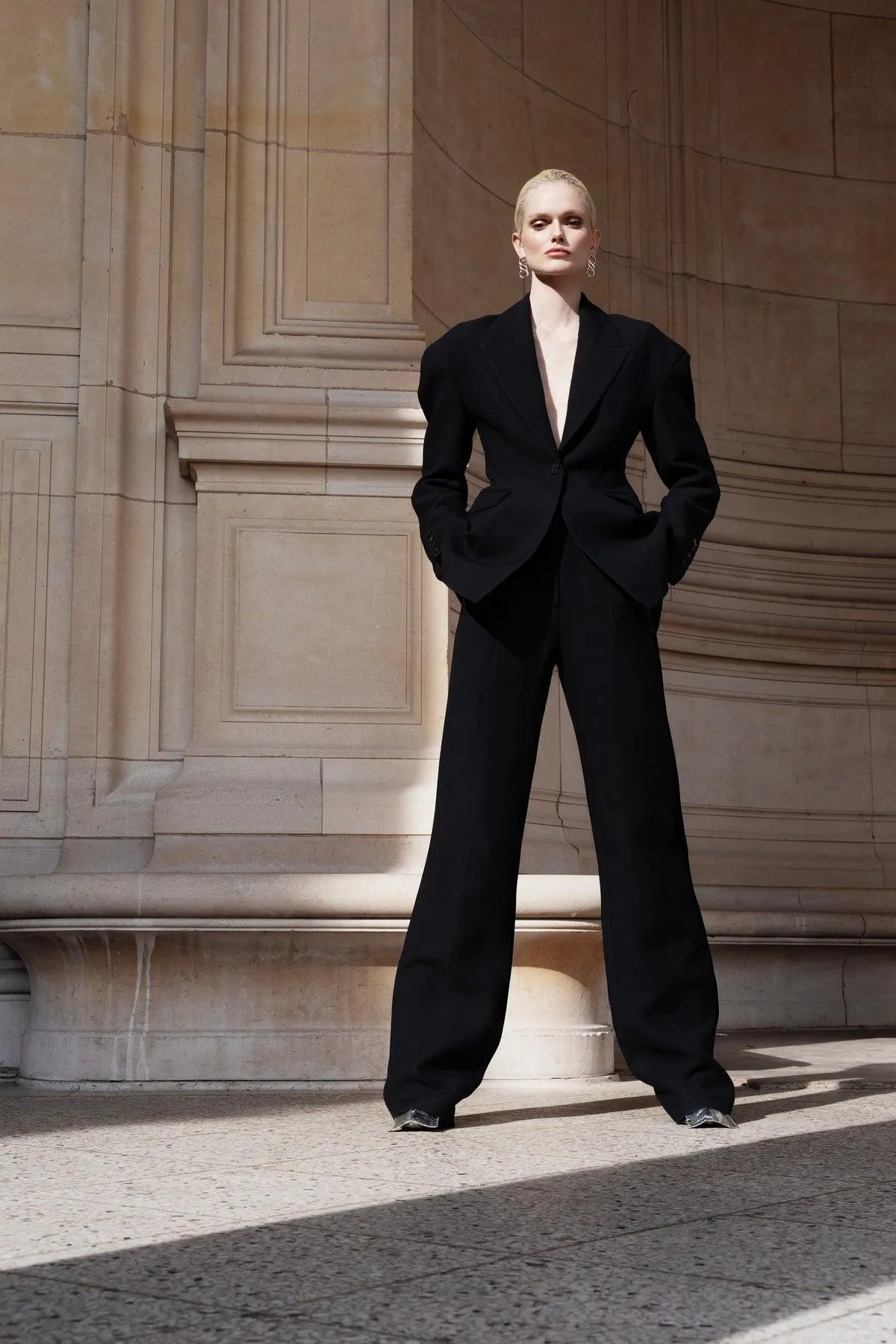
There were exaggerated shoulders, tailored jackets, low-slung trousers and preppy references in menswear. Elsewhere, equestrian influences, structured skirts and sensual evening dresses brought different periods of Gucci’s history into conversation.
The result was a wardrobe that moved between established wealth and deliberate rebellion.
This combination is particularly interesting because Gucci has long occupied a space between heritage and provocation. Its visual identity includes traditional leather goods and equestrian symbolism, but also the theatrical sensuality associated with the house’s fashion history.
Demna appears interested in allowing those contrasting identities to coexist.
Rather than treating elegance and eccentricity as opposites, the collection suggested that luxury can accommodate both.
Why Gucci’s creative direction matters
Demna’s appointment followed a difficult period for Gucci, whose parent company, Kering, has faced pressure to improve the house’s commercial performance.
The designer arrived with an established reputation for challenging conventional luxury codes during his time at Balenciaga. At Gucci, however, the challenge is different.
He must establish a creative language that feels contemporary without losing the characteristics that make the Italian house recognisable.
That means balancing experimentation with products that can succeed beyond the runway.
The boutique-inspired presentation offered a revealing indication of this strategy. Fashion imagery, retail architecture, accessories and clothing were brought together into one coherent environment.
It was a reminder that the commercial strength of a luxury house depends on more than a memorable fashion show.
The return of expressive luxury?
Across the collection, clothing communicated identity through visible design choices: assertive tailoring, recognisable accessories, strong proportions and carefully constructed glamour.
This raises a broader question for contemporary fashion.
After years in which understated dressing has dominated parts of the luxury conversation, is there renewed space for fashion that announces itself?
Demna’s Gucci makes a case for expression rather than anonymity.
Yet the collection is not simply a rejection of restraint. Some of its strongest ideas depend on familiar wardrobe pieces—a jacket, a skirt, a shirt or a pair of trousers—reconsidered through proportion, styling and attitude.
That balance may prove essential. A distinctive runway image can attract attention, but wearable pieces and desirable accessories are what connect the designer’s vision to everyday customers.
What happens next for Gucci?
The September show established a clearer picture of Demna’s creative ambitions, but its long-term significance will depend on what follows.
Future collections, retail execution, customer response and Gucci’s reported financial performance will provide a more meaningful measure of success than the immediate reaction to one runway presentation.
For now, the most interesting development is the breadth of the designer’s proposed Gucci identity.
His collection offered several characters, multiple interpretations of elegance and a willingness to embrace the contradictions that have shaped the house.
La Modelle’s perspective: The challenge for Gucci is not simply to become more visible. It is to make that visibility distinctive, desirable and sustainable. Demna has offered an ambitious visual direction; the next test is whether it can become a compelling luxury business.
Reporting and references
This article is an original editorial analysis informed by independent reporting and runway coverage:
- The Guardian — Chloe Mac Donnell, 25 September 2026
- Reuters — Gucci’s Demna blends aristocracy and pop culture
- Vogue Runway — Gucci Spring 2027 Ready-to-Wear
- Associated Press — Demna’s Gucci presentation
Editorial analysis by La Modelle. This publication is independent of Gucci and the referenced news organisations.