Fashion Industry | Paris Fashion Week | 10 October 2026
At Paris Fashion Week, Pierpaolo Piccioli presented a Balenciaga collection that brought the precision of haute couture into familiar wardrobes. From sculptural tailoring to reimagined denim, the designer offered a new interpretation of modern luxury.
A personal vision of Balenciaga
Pierpaolo Piccioli’s Spring/Summer 2027 presentation at Paris Fashion Week marked another important chapter in his creative direction for Balenciaga.
Presented on 1 October at the Tennis Club de Paris, the collection explored a deceptively simple idea: exceptional craftsmanship should not be reserved exclusively for extraordinary occasions.
Instead, Piccioli looked towards the clothes people already recognise—shirts, jeans, jackets and dresses—and considered how the techniques of couture could transform their proportions, construction and emotional impact.
The result was a collection that connected the fashion house’s historic expertise with a contemporary approach to dressing.
The symbolism of coral
At the centre of the runway stood a monumental coral-inspired textile sculpture by artist Aude Franjou.
The installation introduced a personal element to the presentation. Piccioli is known for wearing a coral necklace, making the imagery particularly associated with his own identity.
Against the otherwise restrained setting, the sculpture offered a striking visual contrast: an intricate organic form surrounded by architectural simplicity.
For La Modelle, that contrast provides a useful way to understand the collection itself.
Piccioli’s designs moved between bold expression and carefully controlled restraint. Some garments relied on strong colour or elaborate surface treatment, while others allowed shape and construction to carry the entire visual message.
The result was not maximalism for its own sake, but a search for impact through deliberate design decisions.
When everyday clothing meets couture
One of the most compelling ideas in the collection was the transformation of familiar garments.
A white shirt acquired sculptural volume through an exaggerated peplum. Denim was reshaped with a defined hourglass waist. Elsewhere, fluid fabric and architectural silhouettes created an unusual relationship between ease and precision.
These details matter because they suggest a different way of thinking about luxury.
Rather than defining exclusivity solely through elaborate eveningwear, Piccioli brought couture-inspired construction into clothing associated with everyday life.
This approach also connects with Cristóbal Balenciaga’s enduring influence on fashion. The founder’s reputation was built in part on his exceptional understanding of silhouette, volume and the relationship between fabric and the body.
Piccioli’s challenge is to reinterpret those principles for customers whose wardrobes and expectations are very different from those of Balenciaga’s original couture clientele.
Colour, silhouette and emotion
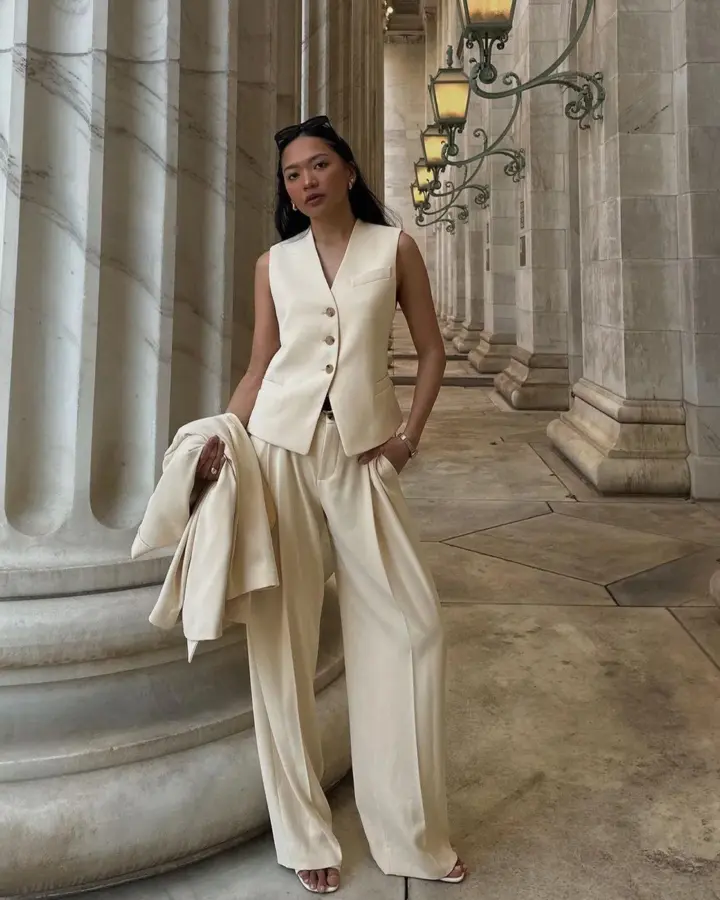
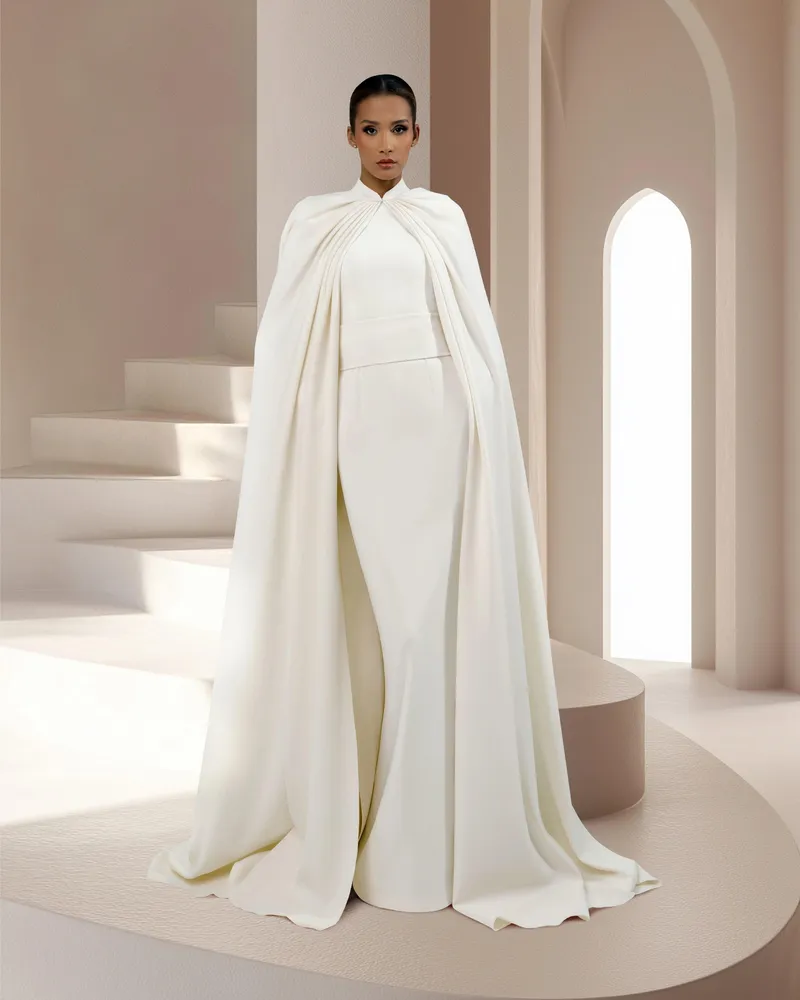
The collection moved through restrained whites and creams, stronger passages of colour and dramatic black eveningwear.
Capes, sculptural outerwear and carefully shaped dresses demonstrated Piccioli’s interest in garments that make a statement without relying entirely on visible branding.
Harper’s Bazaar also highlighted the collection’s practical reinterpretation of Balenciaga’s cocoon shapes, including construction details that made sculptural clothing feel more adaptable.
There is an important distinction between making clothing visually dramatic and making it difficult to wear.
Piccioli’s collection appeared interested in narrowing that gap.
Its most persuasive moments suggested that experimentation and practicality do not have to be competing ideas.
A different chapter after Demna
Any discussion of Balenciaga’s present direction inevitably involves the legacy of its previous creative director, Demna.
During his tenure, Balenciaga became closely associated with provocative runway presentations, streetwear influences and an unusually direct engagement with contemporary popular culture.
Piccioli brings a different emphasis.
His work places greater visible attention on couture techniques, romantic expression, colour and the possibilities of traditional garment construction.
That does not necessarily mean rejecting everything that came before. Fashion houses evolve through successive interpretations, and their identities are rarely defined by a single designer.
The more interesting question is how Balenciaga can combine its historical strengths with the expectations of today’s luxury customers.
Piccioli’s answer, at least in this collection, begins with the clothes themselves.
Can craftsmanship become a commercial advantage?
The creative shift also carries a business challenge.
The Guardian reported pressure surrounding Balenciaga’s sales performance, particularly in menswear, alongside wider uncertainty in the luxury market.
However, a runway presentation cannot establish whether a commercial turnaround is underway.
That will depend on how the collection translates into retail products, customer demand and the brand’s performance over time.
Piccioli’s approach raises a worthwhile strategic question: can a stronger emphasis on craftsmanship create desire for familiar wardrobe pieces at luxury prices?
The answer may depend on whether customers recognise the value of the design work—not simply the name attached to the garment.
A beautifully constructed shirt or precisely shaped jacket must offer something sufficiently distinctive to justify its place within a luxury collection.
What Piccioli’s Balenciaga tells us about fashion
The wider significance of this collection lies in its relationship with the everyday wardrobe.
Fashion regularly alternates between spectacle and restraint, novelty and familiarity, experimentation and commercial practicality.
Piccioli’s Balenciaga suggests that these categories need not remain separate.
A garment can be recognisable without being ordinary. It can be comfortable without abandoning structure. And it can draw on couture traditions without belonging exclusively to the world of formal eveningwear.
For a fashion house with such a substantial design heritage, that is a compelling direction to explore.
La Modelle’s perspective: Pierpaolo Piccioli’s strongest idea is not simply to bring couture back into the conversation. It is to demonstrate that couture thinking can influence the clothes people wear every day. The future of his Balenciaga will depend on how convincingly that philosophy develops beyond the runway.
Sources and editorial references
- The Guardian — Jess Cartner-Morley, 1 October 2026
- Vogue Runway — Balenciaga Spring 2027 Ready-to-Wear, Sarah Mower
- Vogue France — Balenciaga Spring/Summer 2027
- Harper’s Bazaar — Balenciaga Shows a Pragmatic Take on Beauty
Original fashion-industry analysis by La Modelle. Independent of Balenciaga and the referenced publications.